

Vending Machines for Schools: What Institutions Should Consider

Schools and educational institutions are increasingly exploring convenient ways to provide students and staff with easy access to food, beverages, and essential items throughout the day. However, selecting the right solution requires more than simply installing a machine.
Vending machines for schools need to support the needs of students, teachers, facility teams, and operators while aligning with expectations around healthier choices, convenience, safety, and efficient management.
Across the UK, Europe, the Middle East, and Africa, schools are adopting smarter vending solutions to improve accessibility while maintaining better control over products, operations, and user experience.
Why Schools Are Considering Smart Vending Solutions
Traditional food services such as cafeterias and canteens remain important in many educational environments.
However, schools often face challenges such as:
Limited food service hours
Large student populations
Demand for quick access between classes
Staffing requirements
Managing different food preferences
Smart vending machines provide an additional option by offering self-service access to snacks, beverages, and other approved products.
They can help schools provide:
Convenient food access
Extended availability
Cashless purchasing
Better inventory visibility
Flexible product selection
For schools, vending should not replace thoughtful food planning. Instead, it can complement existing facilities by providing additional convenience.
Key Factors Schools Should Consider Before Installing Vending Machines
Choosing the right vending solution requires understanding the institution’s requirements, student needs, and operational goals.
Important considerations include:
Product selection
Health and wellness goals
Machine placement
Payment options
Safety and accessibility
Monitoring and maintenance
School Requirements vs Smart Vending Benefits
School Requirement | Smart Vending Solution Benefit |
Healthier product choices | Flexible product selection based on school requirements |
Limited staff availability | Automated self-service access |
Need for operational visibility | Remote monitoring and reporting |
Reduced cash handling | Cashless payment options |
Changing student preferences | Data-driven inventory planning |
Multiple locations | Centralised management capabilities |
1. Selecting the Right Products for Students and Staff
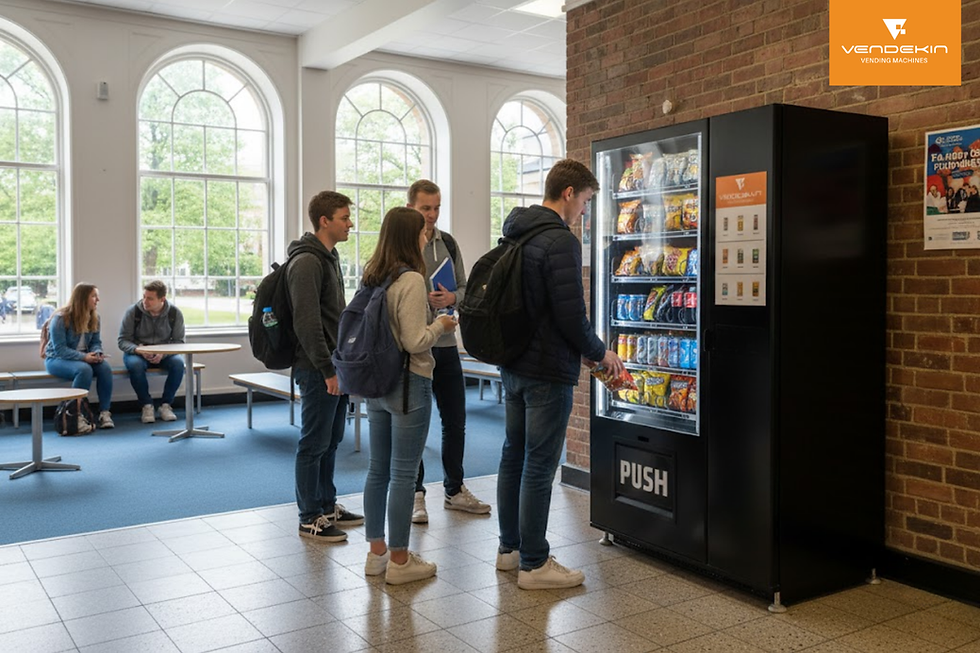
Product selection is one of the most important decisions for school vending.
A successful vending machine should consider the needs of different users:
Students
Students often prefer:
Convenient snacks
Beverages
Quick food options
Affordable products
Teachers and Staff
Staff requirements may include:
Healthy snacks
Quick refreshments during breaks
Schools should focus on creating a balanced product mix that supports their own food policies and user expectations.
2. Supporting Healthier Food Choices
Health and wellness are becoming increasingly important considerations for educational institutions.
Schools can evaluate vending selections based on:
Nutritional value
Portion sizes
Ingredient information
Product variety
A balanced vending approach can include:
Water and lower-sugar beverages
Traditional favourites
Suitable meal options
The right product mix depends on the age group, institution guidelines, and local requirements.
3. Choosing the Right Location Within the School
Placement has a direct impact on vending machine usage.
Suitable locations may include:
Student common areas
Libraries
Staff rooms
Sports facilities
Campus buildings
Schools should consider:
Visibility
Accessibility
Student movement patterns
Supervision requirements
A well-placed vending machine is easier for students and staff to access while remaining manageable for facility teams.
4. Cashless Payments for Modern School Environments
Payment behaviour is changing across educational environments.
Modern vending machines can support:
Contactless payments
RFID cards
Mobile wallets
Digital payment methods
Cashless vending provides benefits such as:
Faster transactions
Reduced cash handling
Improved convenience
Better transaction visibility
For schools, cashless payments can create a smoother experience for students, staff, and operators.
5. Smart Monitoring and Inventory Management

Managing vending machines manually across educational campuses can be challenging.
Smart vending technology helps operators monitor:
Product availability
Machine status
Sales activity
Inventory levels
vNetra help operators manage smart vending operations by providing visibility into machine performance and inventory insights.
For schools, this means fewer interruptions and better product availability.
6. Maintaining Safety and Reliability
Schools require vending solutions that are reliable and easy to manage.
Important considerations include:
Product Management
Schools should regularly review products and ensure selections remain suitable for users.
Machine Maintenance
Regular servicing helps maintain:
Machine performance
Customer experience
Availability
Operational Support
Schools and operators should have clear processes for:
Restocking
Maintenance requests
Issue resolution
Smart Vending Use Cases Across Educational Environments
Primary and Secondary Schools
Suitable for providing controlled access to snacks, beverages, and refreshments while supporting school requirements.
Colleges and Universities
Higher education environments often benefit from extended availability and greater product variety.
Boarding Schools
Vending can support students with convenient access outside traditional meal schedules.
Sports Facilities
Schools with sports centres can provide hydration and refreshments for students, staff, and visitors.
Staff Areas
Dedicated vending solutions can improve workplace convenience for teachers and administrative teams.
Benefits for School Facility Teams
For facility managers, smart vending solutions provide operational advantages.
Better Visibility
Connected systems help monitor machine activity without relying only on physical checks.
Easier Inventory Management
Operators can understand which products require replenishment.
Reduced Administrative Effort
Automated monitoring reduces the workload associated with managing vending operations.
Scalability
Schools operating multiple buildings or campuses can manage vending locations more efficiently.
Upgrading Existing School Vending Machines
Some educational institutions already have vending machines but want to improve their capabilities.
Instead of replacing existing equipment, retrofit solutions such as Myccro can help modernise traditional vending machines.
Myccro can enable features such as:
Cashless payments
Connected operations
Remote visibility
Improved user experience
This allows operators to upgrade existing vending infrastructure while adding modern vending capabilities.
The Future of Vending Machines in Education
Educational environments are becoming more connected and technology-driven.
Future school vending solutions will increasingly focus on:
Smarter inventory management
Better product recommendations
Connected monitoring
Improved user experiences
As schools continue looking for flexible ways to support students and staff, smart vending machines will become an increasingly valuable addition to modern campuses.
Vendekin’s Approach to School Vending Solutions
Vendekin helps institutions and vending operators create smarter unattended retail experiences through connected vending technology.
With smart vending machines and platforms such as vNetra, operators can monitor performance, manage inventory, and improve operational efficiency.
For existing vending fleets, solutions like Myccro help modernise traditional machines with connected capabilities and cashless payments.
The focus is on helping educational institutions provide convenient, reliable, and scalable vending solutions.
Conclusion
Vending machines for schools can provide educational institutions with a flexible way to improve food and beverage accessibility while supporting operational efficiency.
The right solution depends on more than the machine itself. Schools should consider product selection, student needs, payment options, monitoring capabilities, and ongoing support.
By combining smart vending technology with thoughtful planning, schools across the UK, Europe, Middle East, and Africa can create convenient self-service environments that benefit students, teachers, and facility teams.
FAQs
Are vending machines suitable for schools?
Yes. Vending machines can complement school canteens by providing convenient access to approved snacks, beverages, and other essentials for students and staff.
What products can schools stock in vending machines?
Schools can choose a balanced mix of water, lower-sugar beverages, healthier snacks, quick food options, and other products that align with their food policies and student needs.
Can school vending machines accept cashless payments?
Yes. Modern smart vending machines can support contactless payments, mobile wallets, and other digital payment methods, helping reduce cash handling and simplify transactions.
Where should vending machines be placed in schools?
Suitable locations include student common areas, libraries, sports facilities, staff rooms, and other accessible campus areas with appropriate visibility and supervision.
Can existing school vending machines be upgraded instead of replaced?
Yes. Retrofit solutions such as Vendekin’s Myccro can add capabilities such as cashless payments, connectivity, and remote operational visibility to compatible existing vending machines.


Comments