

University Campus Vending: Meeting Student Expectations for Healthy, Cashless Option
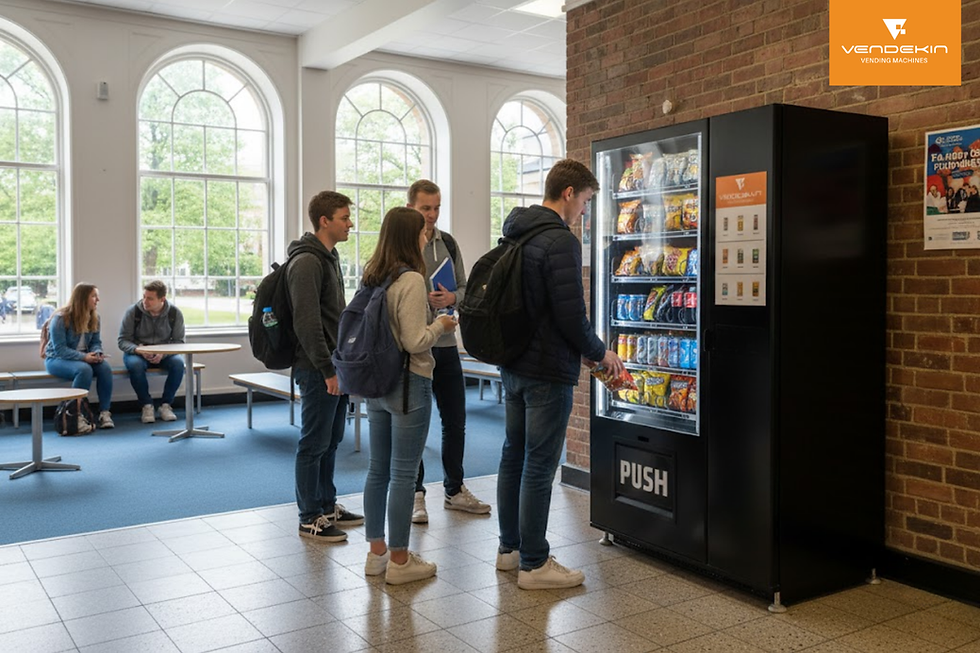
University campuses operate like small cities. Thousands of students, faculty members, and visitors move between lecture halls, libraries, hostels, and common areas every day. In this dynamic environment, campus vending machines are no longer basic refreshment units. They are part of the student experience.
For university administrators and campus facility teams, modern vending must align with three core expectations. Healthy choices, cashless payments, and reliable availability across high-traffic zones.
Why Campus Expectations Have Changed
Today’s students are digitally native and health-aware. They expect frictionless payment experiences and better snack options, even in unattended retail.
Traditional vending machines struggle to meet these expectations. Limited payment methods, restricted product variety, and minimal monitoring often result in stockouts and dissatisfaction.
Modern campus vending machines, built on smart vending infrastructure, address these gaps with cashless access, real-time monitoring, and flexible product management.
The Rise of Cashless Campus Vending
On university campuses, cash usage is steadily declining. Students prefer contactless cards, mobile wallets, and digital payments.
Cashless campus vending machines support:
Fast tap-to-pay transactions
Reduced queue times between classes
Clear digital receipts and transaction logs
Lower risk of theft or cash handling errors
For campus facility teams, cashless systems reduce administrative effort and simplify financial reconciliation.
Healthier Options for a Health-Conscious Generation
Healthy vending is increasingly important in educational institutions. Universities often promote wellbeing initiatives and balanced nutrition.
Modern campus vending machines can include:
High-protein snacks
Plant-based and vegetarian options
Low-sugar beverages
Portion-controlled formats
Smart vending systems allow operators to track which healthier options perform well in different campus zones, such as libraries versus sports facilities. This data-driven approach ensures that healthier products are not only offered, but optimized.
Strategic Placement Across Campus
Placement plays a significant role in campus vending success.
High-performing locations typically include:
Academic building corridors
Library entrances
Student lounges
Hostel common areas
Sports complexes
Campus vending machines placed in visible, well-lit areas experience higher engagement and fewer misuse issues.
Smart vending infrastructure also allows facility teams to monitor performance across multiple buildings from a central system.
Real-Time Monitoring for Operational Efficiency

University campuses often span large areas with multiple vending points. Manual monitoring can be time-consuming and inefficient.
Smart vending machines connected to vending machine software enable:
Real-time inventory tracking
Alerts for low stock or technical issues
Performance analysis by location
Better planning of refill schedules
This reduces downtime and ensures that machines remain operational during peak student hours.
Supporting Campus Sustainability Goals
Many universities across Europe and the Middle East have sustainability commitments. Campus vending machines can support these goals by:
Reducing food waste through better inventory planning
Offering healthier and responsibly sourced products
Enabling cashless systems that reduce physical waste
Smart vending data helps facility teams measure usage patterns and improve stocking efficiency over time.
Enhancing Student Experience
Convenience influences student satisfaction. Quick access to refreshments between lectures or during late study sessions makes a difference.
Modern campus vending machines provide:
Intuitive touchscreen interfaces
Clear product visibility
Reliable uptime
Cashless convenience
For administrators, this strengthens campus amenities without adding staffing costs.
Commercial Opportunities for Universities
Campus vending is not only a service. It can also be a structured revenue channel.
Universities can:
Partner with FMCG brands for targeted placements
Promote campus events or health campaigns through digital screens
Optimize vending networks based on real performance data
With smart vending infrastructure, campus vending machines become scalable and manageable assets rather than isolated units.
Vendekin’s Approach to Campus Vending
Vendekin designs campus vending machines as connected, intelligent retail systems suited for large educational environments. Smart vending hardware combined with cashless payment integration and centralized monitoring allows universities to deploy vending across multiple campus buildings with confidence.
The focus is on predictable performance, flexible product management, and measurable outcomes. This ensures that campus vending aligns with both student expectations and administrative priorities.
What This Means for University Administrators
For university administrators, upgrading to smart campus vending machines improves student convenience and supports institutional wellbeing goals. It enhances campus infrastructure without increasing operational burden.
For campus facility teams, real-time monitoring and cashless systems simplify management and reduce downtime.
Conclusion
Students expect more from campus amenities than ever before. Healthy options, cashless payments, and reliable access are now baseline requirements.
Modern campus vending machines meet these expectations through smart vending technology, real-time monitoring, and flexible product management. For universities looking to improve student experience while maintaining operational control, intelligent campus vending is a practical and scalable solution.


Comments